Highpoints in the history of Braunschweig's theatre certainly include the premier of Lessing's "Emilia Galotti" in 1772 and Goethe's "Faust I" in 1829. However the premiers were not held in the present building, but in the original opera house which was located on the Hagen Market (Hagenmarkt). It opened on February 4, 1690 with J. Kusser's "Cleopatra" and was, after Hamburg, the second freely accessible opera house in Germany.
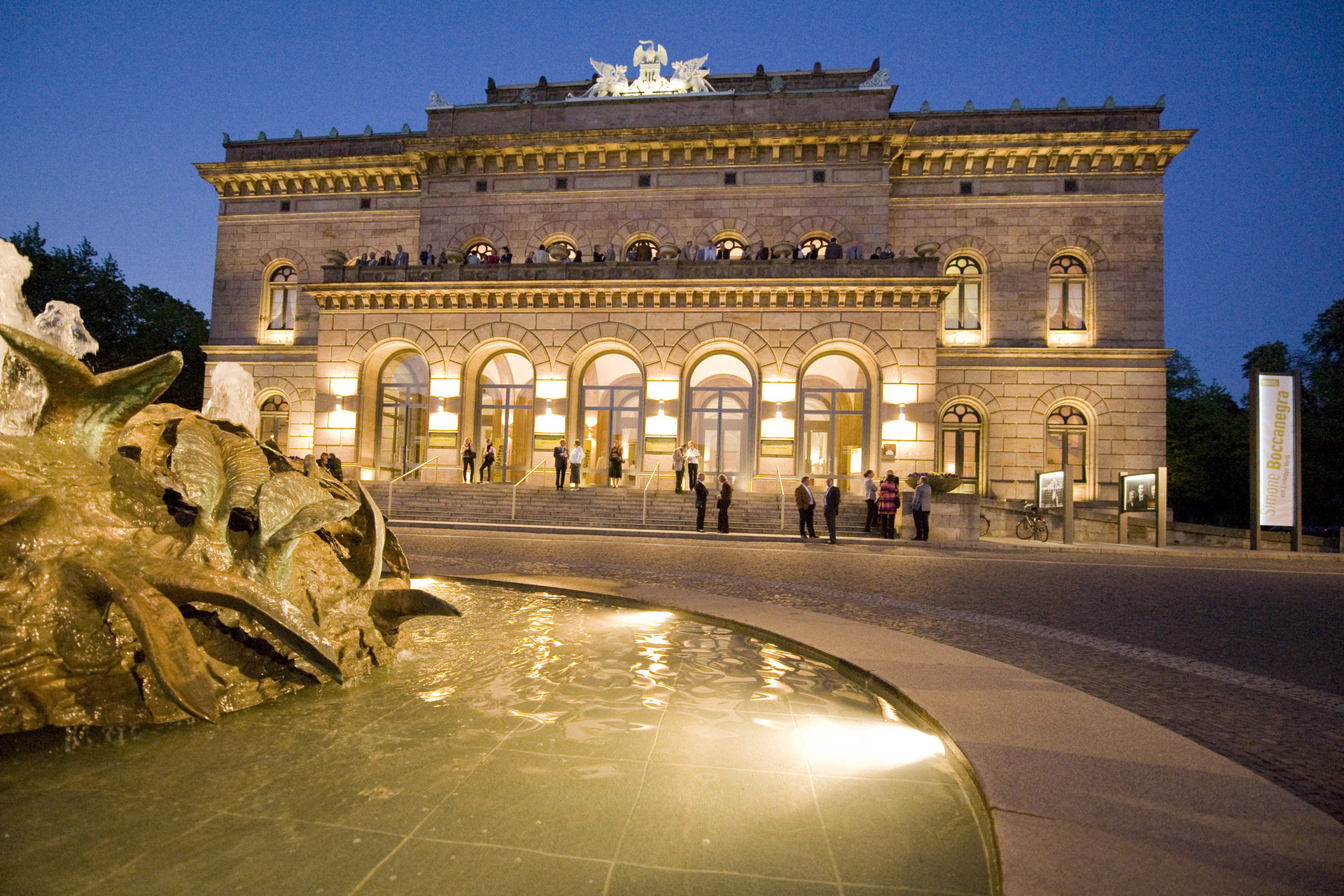
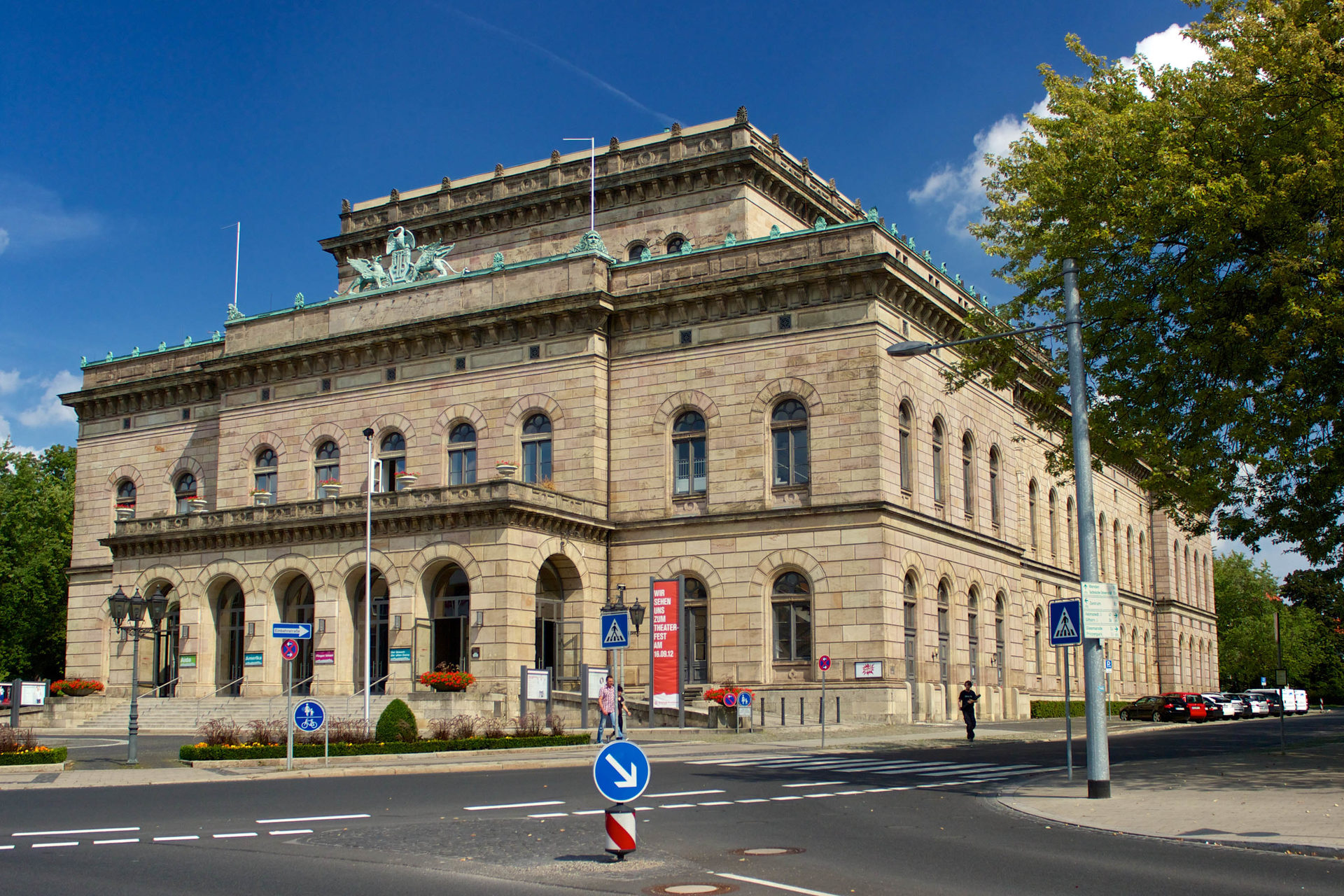
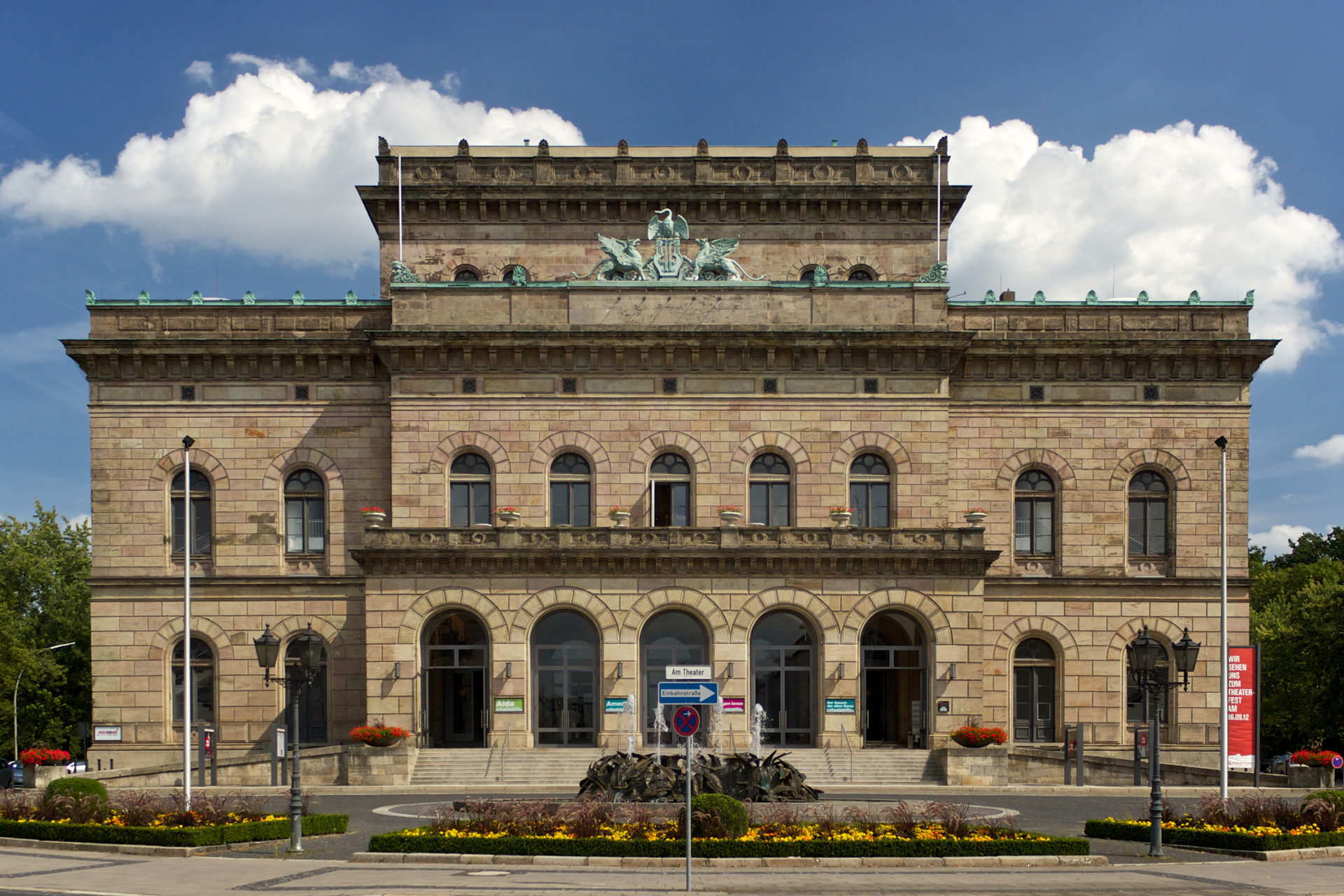
From 1818-1826, the house was managed as a National Theatre in the form of a stock company and then as a Court Theatre. In 1861, the old opera house on the Hagen Market was closed (demolished in 1864) and the new theatre on Steinweg was opened. In 1918 it became the Braunschweigische Landestheater and in 1938 the Braunschweigische Staatstheater (State Theatre of Braunschweig). Architects Carl Wolf and Heinrich Ahlburg used the Baroque style structure and palmette decorations on the parapets to model the building according to the Classicistic structures of the first half of the 19th century. He modeled the façades after the Florentine Early Renaissance style. Two plaques in the entrance area commemorate "Iphigenie" and Richard Wagner as the first play to be performed and first composer to perform in the building. The "Kleine Haus" (Little Theatre) is located diagonally across from the State Theatre of Braunschweig.
The Cimiotti Fountain is situated in the square in front of the State Theatre of Braunschweig (Staatstheater). It is a work of art created by the renowned Braunschweig sculptor Emil Cimiotti. The fountain consists of two half-spherical bronze sculptures with large leaves sprouting out of them. If you look more closely you see snakes, snails, and birds in the middle of the plant motif. The sculptures are lying in a large granite bowl. At night the fountain is lit up by 10 underwater spotlights.
Contact
|
Staatstheater - Cimiotti Brunnen
|
|---|
Related Links
-
City tour in a vintage one-and-a-half decker Büssing bus (for groups only)
Lean back and follow your city guide’s explanations to the sights passing by your window.